amphibians · first animal
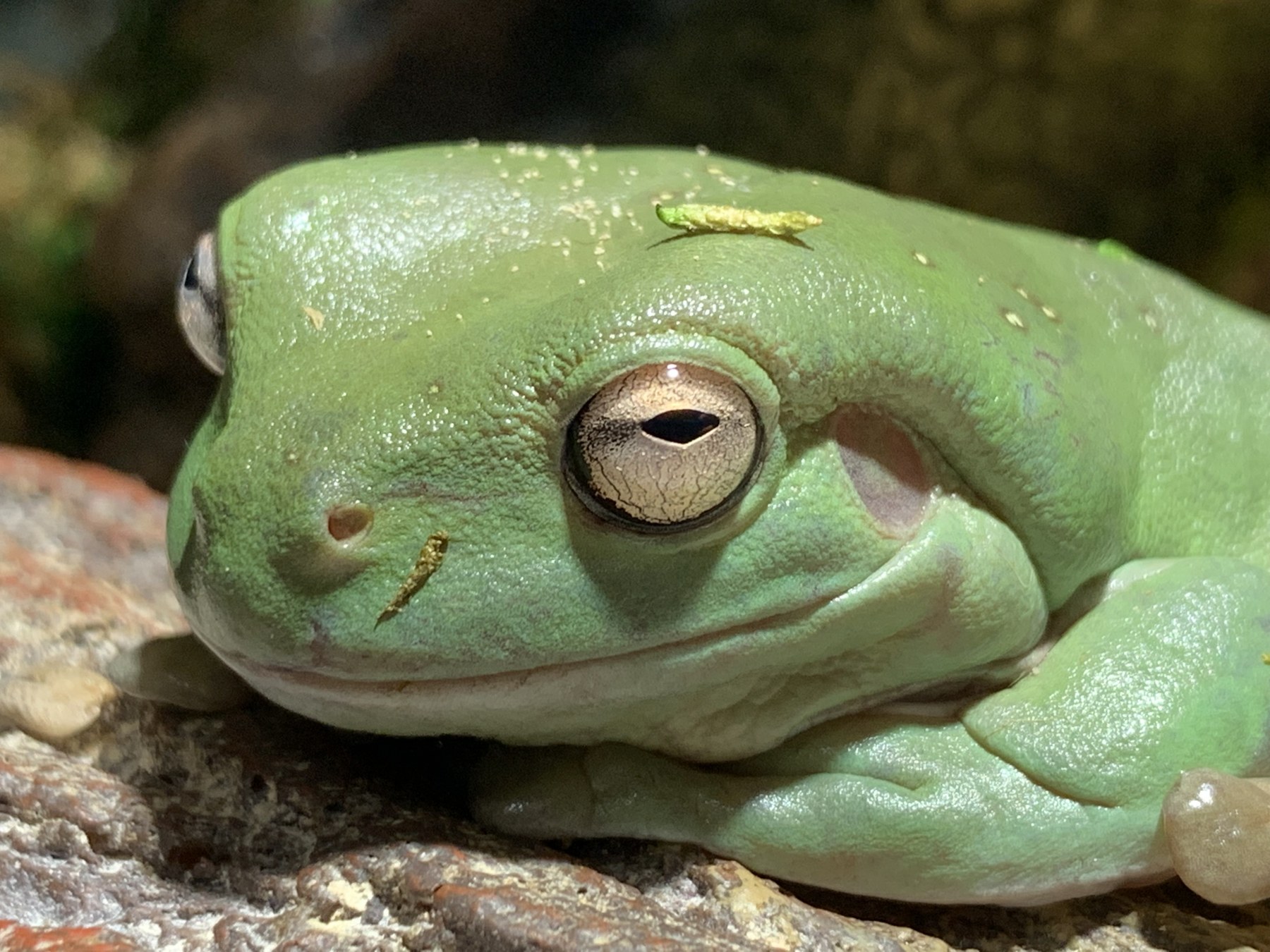
White's treefrog
Litoria caerulea
A large, easy-going treefrog from Australia and New Guinea. Captive-bred babies are the ones to start with, including animals selectively bred for a blue phase.
- Handling
- One of the frogs that will tolerate careful handling. Wash off soap, detergent, and bug spray first. The skin is still the animal.
- Enclosure
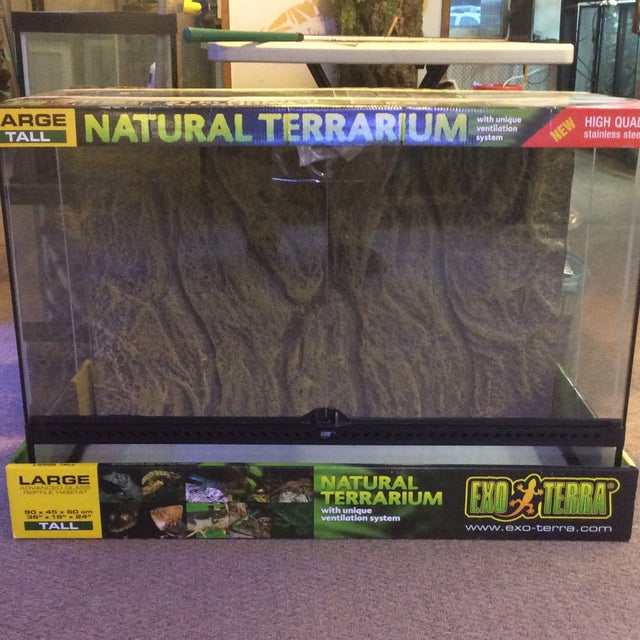
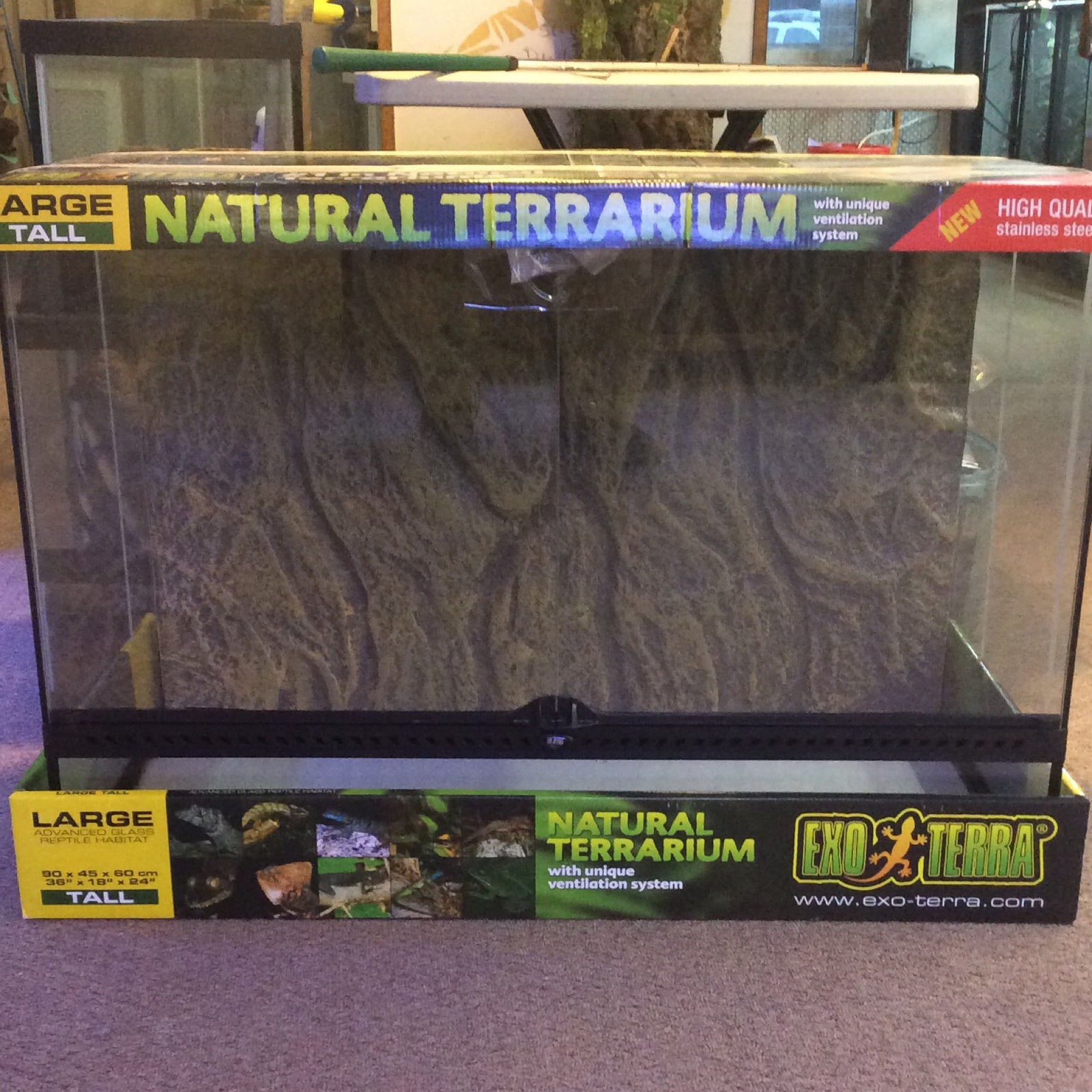
- A 10-gallon tank will house an adult or a pair, oriented so they can climb. Juveniles do better in a smaller box, such as a critter keeper, so they can catch food and you can hold humidity. Paper towels for young frogs. Adults can be kept on large pea gravel. Branches, rocks, and sturdy plants. A medium water bowl, cleaned often.
- Heat
- Most active at dusk and dawn, asleep through much of the day. Lighting is your choice — coil bulbs or other fluorescents are what we use. They do not need a desert basking lamp.
- Humidity
- Keep juveniles and adults drier than a dart-frog tank: a large water bowl, not a soaked box. High humidity here is how ammonia builds and how red-leg shows up.
- Diet
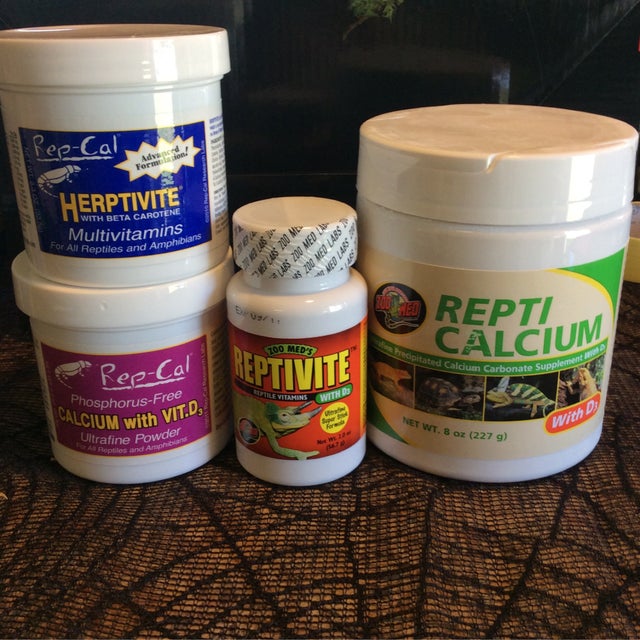
- Young frogs: crickets about 1/8 to 1/4 inch, every other day, gut-loaded and dusted. Vary with waxworms, butterworms, moths, or roaches, and go easy on the worms. Adults: larger prey, two or three times a week, dusted every other or every third feeding, with an occasional pinkie.
This sheet is a start. Ask what the frog in front of you is eating, and find an amphibian vet before you need one.